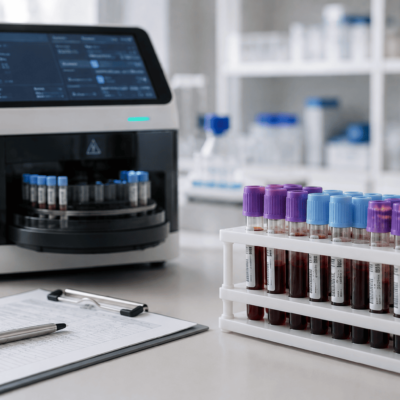






















The In Vitro Diagnostic Regulation (IVDR regulation) significantly changes the regulation of in vitro diagnostic medical devices to enhance public health protection and patient safety. It introduces a risk-based classification system, stricter conformity assessments, and higher standards for clinical evidence. Additionally, it mandates a Unique Device Identification (UDI) system and robust post-market surveillance. These changes require manufacturers to thoroughly understand and prepare for compliance to maintain market access in the EU.
1. What is IVDR?
The In Vitro Diagnostic Regulation (IVDR) is a European Union regulation (EU 2017/746) that governs the market access, safety, and performance of in vitro diagnostic medical devices (IVDs). It replaces the previous In Vitro Diagnostic Directive (IVDD) and introduces more stringent requirements for IVDs.
2. When did IVDR regulation come into effect?
IVDR came into effect on May 26, 2017. However, there is a transition period to allow manufacturers to comply with the new requirements, ending on May 26, 2022, for most devices. Certain provisions may extend compliance deadlines for specific types of IVDs.
3. What are the main changes introduced by IVDR compared to IVDD?
- Risk-Based Classification: IVDR introduces a new risk-based classification system for IVDs, ranging from Class A (low risk) to Class D (high risk).
- Notified Body Involvement: Most IVDs now require assessment by a Notified Body, a significant change from the self-certification process under IVDD.
- Performance Evaluation: Enhanced requirements for clinical evidence and performance evaluation to ensure safety and effectiveness.
- Post-Market Surveillance: Strengthened post-market surveillance obligations, including vigilance and trend reporting.
- Transparency and Traceability: Introduction of a Unique Device Identification (UDI) system to improve traceability.
4. How does the new classification system under IVDR regulation work?

5. What is a Notified Body, and what role do they play under IVDR?
A Notified Body is an organization designated by an EU country to assess the conformity of certain products before being placed on the market. Under IVDR regulation, Notified Bodies are responsible for the assessment and certification of most IVDs to ensure they meet the regulatory requirements.
6. What are the requirements for clinical evidence under IVDR?
Manufacturers must provide robust clinical evidence demonstrating the safety, performance, and clinical benefits of their IVDs. This includes clinical performance studies, analytical performance studies, and scientific validity reports.
7. What is the Unique Device Identification (UDI) system?
The UDI system is a new requirement under IVDR regulation aimed at improving the traceability of medical devices. Each device will have a unique identifier that must be included on the device label and packaging. This system helps enhance post-market surveillance and traceability.
8. What are the post-market surveillance requirements under IVDR regulation?
Manufacturers are required to implement a proactive post-market surveillance system to continuously monitor the safety and performance of their IVDs. This includes collecting and analyzing real-world data, vigilance reporting of adverse events, and regular updates to the performance evaluation.
9. How should manufacturers prepare for IVDR compliance?
Manufacturers should:
- Conduct a gap analysis: Identify areas where current processes do not meet IVDR requirements.
- Update technical documentation: Ensure all technical files are comprehensive and up-to-date.
- Engage with Notified Bodies: Begin the conformity assessment process with an accredited Notified Body.
- Implement a UDI system: Develop and integrate a UDI system for product traceability.
- Establish robust post-market surveillance: Set up systems to monitor device performance and safety in the market.
10. How we can support pharma companies with IVDR-conform assays?
At Medicover Integrated Clinical Services (MICS), we specialize in developing and validating IVDR-compliant qPCR assays tailored to the needs of pharmaceutical companies. Our expertise includes:
- Custom Assay Design: We design and optimize qPCR assays specific to your clinical trial requirements, ensuring high sensitivity and specificity.
- IVDR Validation: We conduct comprehensive validation studies to meet IVDR standards, covering accuracy, precision, specificity, sensitivity, and reproducibility.
- Regulatory Support: Our team assists with the preparation and submission of all necessary documentation to regulatory bodies, ensuring a smooth approval process.
- Advanced Technology: Our state-of-the-art facilities and equipment ensure precise and efficient assay development.
- Bioinformatics: We provide robust bioinformatics support to analyze and interpret assay data, transforming it into actionable insights.
- Continuous Support: We offer ongoing assistance, including troubleshooting, assay refinement, and training for your team, ensuring optimal performance throughout your clinical trials.
| Partner with MICS for reliable, compliant qPCR assays that drive the success of your clinical trials. |
11. Where can I find more information about IVDR regulation?
More detailed information can be found:
- What is IVDR regulation and how does it impact clinical trial assays?
- Regulation (EU) 2017/746 on in vitro diagnostic medical devices (IVDR) – Official document: Regulation (EU) 2017/746
- European Commission – New regulations on medical devices – Information on new regulations: IVDR – Regulation (EU) 2017/746
- European Medicines Agency – In vitro diagnostics – Detailed information from EMA: In vitro diagnostics
- The European Union In Vitro Diagnostics Regulation – Regulation (EU) 2017/746 (EU IVDR)
- Factsheet for manufacturers of in vitro diagnostic.
- Getting ready for the new regulations – European Commission (europa.eu)
Author: MICS Editorial Team