
























Obesity in clinical trials is gaining increased attention, reflecting both the global rise in obesity rates and the urgent need for effective treatment options. As pharmaceutical companies and biotech sponsors invest in new therapies, the operational demands of running obesity studies are growing. In this article, we take a closer look at current statistics on obesity worldwide and in Europe, and share our perspective on what it takes to successfully conduct obesity in clinical trials – from patient recruitment and infrastructure to medical expertise and site readiness.
Obesity Worldwide and in Europe
When can we define obesity as a disease? And how does the situation look today? Unfortunately, the statistics paint a worrying picture.
Overweight and obesity are defined as abnormal or excessive fat accumulation that presents a risk to health. According to the World Health Organization (WHO), a body mass index (BMI) over 25 is considered overweight, and over 30 is considered obese. This has become a growing public health concern globally, with prevalence rates steadily increasing over the past decades.
According to the WHO, more than 1 billion people worldwide – one in eight – are currently living with obesity, including over 890 million adults.2,3
Since 1990, adult obesity rates have more than doubled (from 7% to 16%), while among children and adolescents aged 5 to 19, the rate has quadrupled (from 2% to 8%). As of 2022, 43% of adults were considered overweight.
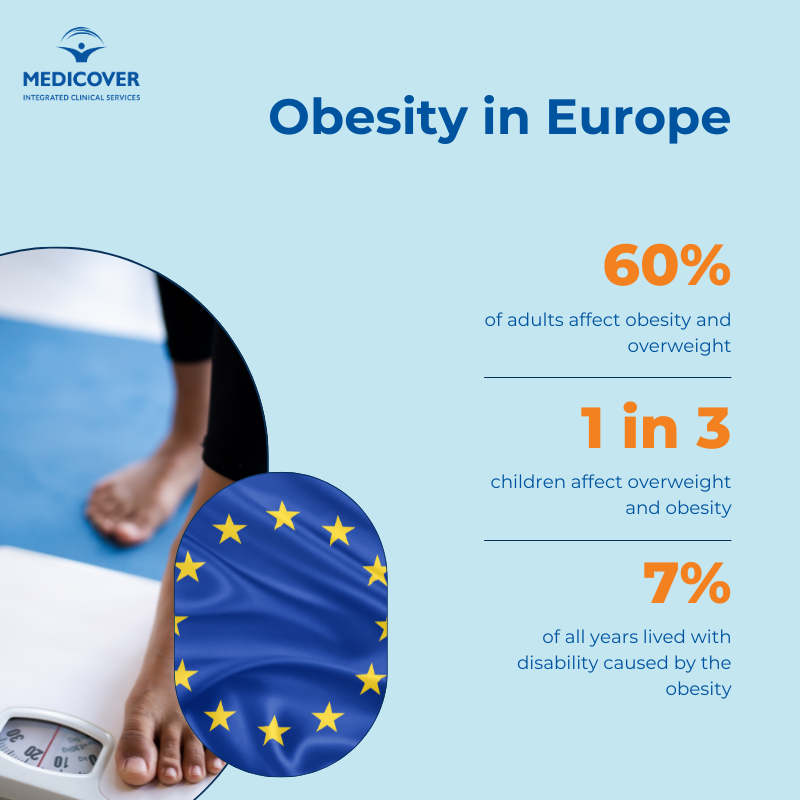
In Europe, the situation is especially concerning: nearly 60% of adults and one in three children are classified as overweight or obese.4 According to the WHO European Regional Obesity Report 2022, overweight and obesity rank as the fourth most common risk factor for noncommunicable diseases (NCDs) in the region – following high blood pressure, dietary risks, and tobacco.1,3
This growing prevalence not only impacts public health but also poses serious economic and healthcare system challenges. It highlights the increasing need for preventive strategies and clinical research. Encouragingly, the pharmaceutical industry has begun shifting focus toward exploring and investing in obesity-related studies.
Global Landscape of Obesity in Clinical Trials
The global interest in obesity research is growing, with a noticeable increase in clinical trials across Europe and the United States. While specific comparative data on trial distribution is limited, conversations between Medicover and its pharma and biotech partners suggest that Europe has seen a significant rise in obesity-related studies in recent years.
A useful resource for tracking this research activity is ClinicalTrials.gov, a publicly accessible registry managed by the U.S. National Library of Medicine. It provides comprehensive information on ongoing, completed, and upcoming studies, including those focused on obesity.
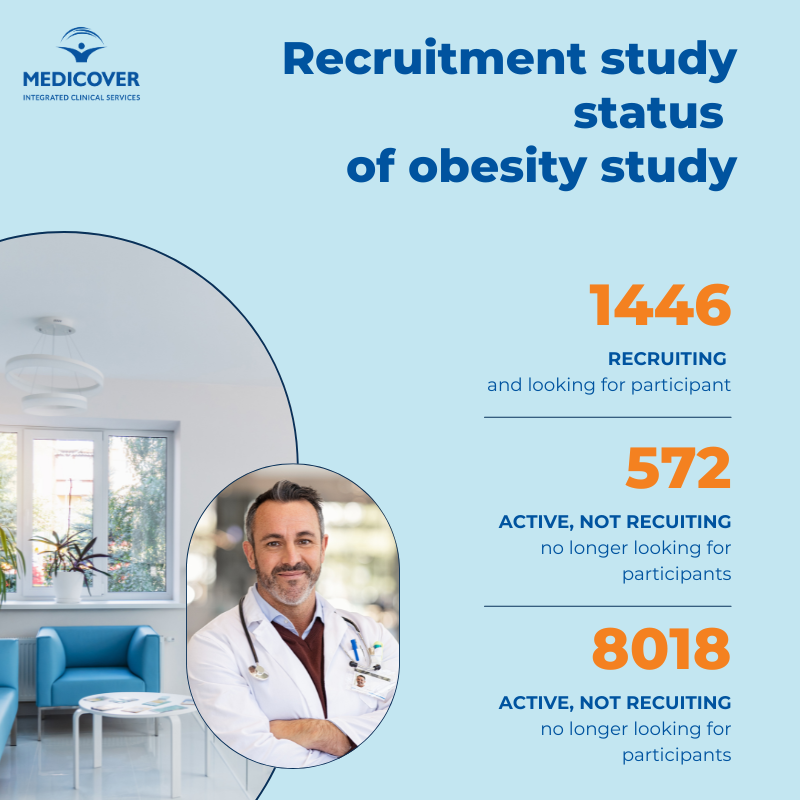
As of April 2025, a search on ClinicalTrials.gov shows 11,489 obesity-related studies registered globally. Of these: 1,446 trials are actively recruiting participants, 498 are not yet recruiting, 118 are enrolling by invitation, 8,018 are marked as completed, 572 are active but no longer recruiting, 513 have been terminated, 285 withdrawn, 39 are currently suspended.5
These numbers reflect the scale of ongoing research aimed at understanding and addressing obesity. The increase in trials over time signals a long-term commitment to finding more effective treatments and prevention strategies.
Industry Response: Patient Recruitment and Obesity-Focused Clinics
The growing prevalence of obesity has prompted increased investment from pharmaceutical and biotech companies, with many launching new initiatives to develop treatment options.
For example, Zealand Pharma is actively involved in obesity research, partnering on clinical studies to explore innovative therapeutic approaches. Similarly, AstraZeneca has acknowledged obesity’s role in chronic diseases and its wider impact on healthcare systems.6,7
At Medicover Integrated Clinical Services (MICS), we have observed this trend firsthand and adapted our capabilities to meet the rising demand. Our Site Management Organisation (SMO) supports patient recruitment efforts by connecting clinical researchers with patients eligible for obesity treatment. In addition, Medicover has established the first fully comprehensive obesity treatment clinic in Poland – the Medicover Obesity Treatment Center – offering both advanced medical and surgical interventions.8
With more companies turning their focus to obesity research, operational strengths like patient access, recruitment support, and specialised clinical infrastructure have become essential to the success of clinical studies. We bring hands-on experience in this area, having conducted multiple obesity trials across our site network in Poland and Germany. Partnering with various sponsors, we’ve consistently delivered on recruitment goals within accelerated timelines. Patient interest remains strong, and we’re actively expanding our research base to support upcoming projects focused on overweight and obesity. This continued growth is backed by access to physicians with deep expertise in obesity care.
If you’re interested in learning more about our SMO and patient recruitment capabilities, feel free to contact our SMO Global Head, Marta Jeka.
Choosing the Right Partner for Obesity in Clinical Trials
When selecting a clinical trial partner for obesity research – whether it’s a central laboratory or a patient recruitment provider – experience and operational expertise should be top priorities.
If you’re considering conducting your study in Poland, here are a few key questions to ask:
- What experience does the provider have in managing clinical trial sites (Site Management Organization experience)?
- How does the provider support patient recruitment in Poland and across Europe?
- Can they deliver essential services such as kit production, sample handling, and long-term storage?
- Why is the provider considered a reliable and efficient partner in clinical research?
- What is their recruitment potential – that is, do they have access to the right patient population for your study?
- Is the quality of their research supported by international audits, ISO certifications, and established Standard Operating Procedures (SOPs)?
- What is their typical contracting and study start-up timeline?
Choosing a partner with experience in obesity in clinical trials and the right infrastructure in place can significantly improve the timeline, quality, and success of your study.
Frequently Asked Questions: Obesity in Clinical Trials
1. Why is obesity considered a disease and not just a lifestyle issue?
Obesity is defined by the WHO as excessive fat accumulation that presents a risk to health. It is recognized as a chronic disease because it contributes to serious health conditions such as diabetes, heart disease, and certain cancers, and often requires long-term medical management rather than lifestyle changes alone.
2. How widespread is obesity in Europe compared to the global average?
Globally, more than 1 billion people are affected by obesity. In Europe, the issue is especially severe: nearly 60% of adults and one in three children are classified as overweight or obese, placing the region among the most affected worldwide.
3. How active is the clinical research community in addressing obesity in clinical trials?
As of April 2025, over 11,000 obesity-related clinical trials have been registered on ClinicalTrials.gov. More than 1,400 of these are actively recruiting participants, showing the strong and growing interest from pharmaceutical and biotech sectors in tackling obesity in clinical trials an research.
4. What makes a partner organization effective in obesity clinical trials?
A valuable partner should offer proven experience in clinical trial operations, patient recruitment, and reimbursement handling. Capabilities in early-phase research, lab kits production, sample storage, and protocol implementation are also essential for success in obesity in clinical trials.
5. What role does Medicover play in supporting obesity studies?
Medicover Integrated Clinical Services (MICS) supports obesity in clinical trials or research through its Site Management Organisation (SMO), facilitating patient recruitment and trial coordination. Medicover has also established the first comprehensive obesity treatment center in Poland, enhancing access to well-prepared patient populations.
6. Where can I find current clinical trials related to obesity?
You can explore global obesity in clinical trials on ClinicalTrials.gov, a database maintained by the U.S. National Library of Medicine. Use filters to search by location, recruitment status, or study phase.
References
- Obesity, World Health Organization, https://www.who.int/health-topics/obesity/#tab=tab_1, Accessed: 01.04.2025
- Obesity and overweight, World Health Organization, https://www.who.int/news/item/01-03-2024-one-in-eight-people-are-now-living-with-obesity, Accessed: 01.04.2025
- One in eight people are now living with obesity, World Health Organization, https://www.who.int/news/item/01-03-2024-one-in-eight-people-are-now-living-with-obesity, Accessed: 01.04.2025
- WHO European Regional Obesity Report 2022, World Health Organization, https://www.who.int/europe/publications/i/item/9789289057738, Accessed: 01.04.2025
- Search Results, Clinical Trials Gov, https://clinicaltrials.gov/search?cond=obesity&aggFilters=status:rec, Accessed: 01.04.2025
- Zealand Pharma, LinkedIn, https://www.linkedin.com/posts/zealand-pharma_zealand-pharma-announces-collaboration-activity-7305482355543048192-uo63?utm_source=share&utm_medium=member_desktop&rcm=ACoAABI6o8IBOCQMCf2T5ymCtZAe0EMebN394mI
- Jak wprowadzić 20 nowych leków, być eko i innowacyjną firmą jednocześnie, Polityka zdrowotna, https://politykazdrowotna.com/artykul/wersja-robocza-astra-n1480833#topic_2, Accessed: 01.04.2025
- Leczenie otyłości, Medicover, https://www.medicover.pl/szpital/chirurgiczne-leczenie-otylosci/, Accessed: 01.04.2025