




















The company focuses on markets in Central and Eastern Europe as well as India, with operations in 20 countries and a presence in 23. Its headquarters are located in Stockholm, Sweden. Medicover operates through two main divisions: Diagnostic Services and Healthcare Services.
Driven by a holistic approach and a commitment to quality, Medicover is dedicated to improving and sustaining health and well-being. Sustainability is an integral part of this commitment – minimizing environmental impact, promoting social responsibility, and maintaining strong governance principles to guide operations and long-term strategy.
By delivering the right care, in the right place, at the right time – and in the most effective way – the company achieves strong health outcomes and supports sustainable growth.
1993–1995 – Early Days
The foundations of Medicover were laid in the early 1990s, inspired by personal experience and driven by a vision to bring a new model of healthcare to Central Europe. Key milestones from this period include:
- 1993 – ABC Medicover is established in Warsaw, Poland, by Swedish entrepreneur Bengt Beckmann, following his experience with the healthcare system during a visit with his Polish wife, Maria.

1994 – Jonas af Jochnick, co-founder of Oriflame, invests in the company and introduces Fredrik Rågmark, who would go on to serve as CEO of Medicover Group until May 2025. / Photo: Jonas af Jochnick Foundation.
- 1995 – The first ABC Medicover clinic opens in Warsaw in August, introducing a revolutionary model based on prepaid healthcare subscriptions for companies.
This new model focused on comprehensive care under one roof – medical specialists, diagnostic services, and multilingual staff – all in accessible locations with easy parking.
1996–1999 – Treading the Growth Path
The late 1990s marked a period of rapid growth for Medicover – both geographically and in its range of services. Key developments include:
- Medicover expands across Poland, opening clinics in six additional cities, gaining its first national client, and launching its first onsite clinic.
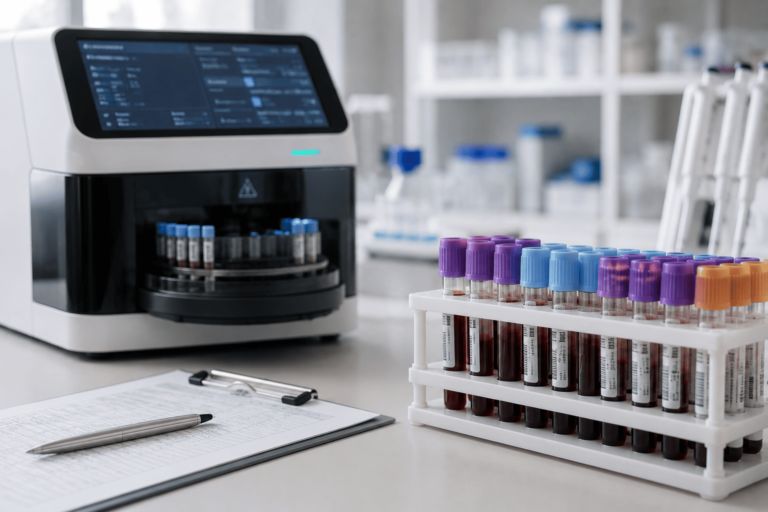
- 1997 – Medicover enters the laboratory diagnostics space by acquiring a small lab in Romania as part of its clinic acquisition. This marks the beginning of the company’s Diagnostic Services offering.
- This leads to the formal creation of the Diagnostic Services Division, focused on in vitro diagnostics and laying the foundation for future lab expansion.
- Expansion continues into Central and Eastern Europe, with new operations established in Romania, Hungary, Estonia, and the Czech Republic.
2000–2010 – Increased Scale of Operations
The 2000s marked a decade of transformation for Medicover, with strategic restructuring, regional expansion, digital innovation, and a growing emphasis on diagnostics. Key milestones include:
- Medicover introduces a new organisational structure built around two core divisions:
• Healthcare Services (HS)
• Diagnostic Services (DS)
- The Medicover Hospital opens in Warsaw, strengthening the Group’s clinical care capabilities.
- Diagnostic Services expands into Poland, Belarus, Ukraine, Serbia, and Germany, marking a new phase of regional growth.
- Medicover becomes the first corporate healthcare group in Poland to implement a nationwide Electronic Medical Record (EMR) system, completed by 2007 across Poland, Romania, Hungary, and Estonia.
- The Medicover Online Patient Portal is launched, allowing online booking of appointments.
- By 2007, patients gain access to test results, medical advice, prescriptions, and health tools through digital channels.
- Synevo, Medicover’s diagnostics brand, enters Ukraine and later acquires IMD laboratories in Berlin and Frankfurt, strengthening its position in Advanced Diagnostics.
- From 2003 to 2009, diagnostics grow from 20% of Medicover’s revenue to nearly equal in size with healthcare.
- A Central Lab opens in Bucharest, with a capacity of 10 million tests annually and a wide range of advanced diagnostics.
- Medicover becomes a private company again as the majority of shares are transferred to the Jonas and Christina af Jochnick Foundation, reflecting a strong philanthropic commitment.
2011–2015 – Gaining Momentum and Educating
In the early 2010s, Medicover accelerated its development through greater community involvement, service diversification, and partnerships in education and research. Key highlights include:
- The Jonas and Christina af Jochnick Foundation is formally established, reinforcing the Group’s long-term commitment to social impact.
- Medicover becomes the first private healthcare provider to collaborate with public universities in Poland and Romania, supporting the education of future medical professionals.
- Expansion into optical services, fertility care, and senior care broadens Medicover’s healthcare offering.
- Diagnostic Services enters Georgia, further extending regional coverage.
- Investments in the clinical trials sector follow, particularly in Ukraine, Poland, Romania, and Germany.

2016–2020 – Redefining the Concept of Health
Medicover continues to evolve, investing in innovative solutions and technologies with a strong focus on patient needs and comfort. This phase is defined by digital transformation, global growth, and public health leadership.
- Medicover enters India by acquiring 12 MaxCure multispecialty hospitals.
- Expansion in Germany includes new clinics, laboratories, and the launch of Medicover Genetics, strengthening personalised medicine services.
- 23 May 2017 – Medicover AB is listed on Nasdaq Stockholm, providing new growth capital.
- The Medicover Foundation is launched, with flagship project PoZdro!, a nationwide initiative focused on diabetes prevention and lifestyle disease awareness.
- During the COVID-19 pandemic, Medicover opens a Test & Fly Center in Munich and activates specialised laboratories to support safe travel and diagnostics.
- The company becomes the first hospital in Europe to accept Bitcoin payments at Medicover Wilanów Hospital in Warsaw.
2021–2025 – Clear Vision for Development
The most recent chapter of Medicover’s journey reflects its clear and ambitious vision for continued growth, innovation, and regional leadership.
- Healthcare Services (HS) expands into Norway and Denmark with a focus on fertility care, and launches dental services in Germany.
- The first German hospital is acquired, and the clinical trials network is expanded in Poland.
- Medicover Genetics enters Cyprus and Greece, strengthening its role in personalised medicine.
- Diagnostic Services (DS) expands into Finland and Bosnia and Herzegovina, and continues to grow in Germany and Bosnia through strategic acquisitions.
- Medicover acquires SYNLAB Group’s businesses in Romania, Turkey, Cyprus, Slovenia, Croatia, and North Macedonia, expanding its regional footprint and entering three new markets.

Medicover Today
Over the past 30 years, Medicover has grown from a single clinic in Warsaw into a leading international provider of healthcare and diagnostics. The company now operates across Central and Eastern Europe, India, and the Nordic countries, with Germany, India, Poland, and Romania as its primary markets.
Through its two core divisions – Healthcare Services and Diagnostic Services – Medicover delivers a wide range of medical and diagnostic services through a large network of ambulatory clinics, hospitals, specialty-care facilities, and laboratories in over 17 countries.
In 2024, Medicover reported:
- EUR 2,091.8 million in revenue
- Close to 50,000 employees
- Over 14 million patient visits
As it looks to the future, Medicover remains committed to delivering high-quality, accessible, and patient-centered care, while continuously innovating to meet the evolving needs of the communities it serves.
References:
- Our History, Medicover, accessed: 05.06.2025
- Medicover AB – Class B, NASADAQ, https://www.nasdaq.com/market-activity/stocks/mcvef, , accessed: 05.06.2025
- Sustainability in Clinical Trials, Medicover Integrated Clinical Services, accessed: 05.06.2025
- JohnJohnick Foundation, accessed: 05.06.2025
- Jonas & Christina af Jochnick Foundation, accessed: 05.06.2025
- Medicover Hospital, Medicover, accessed: 05.06.2025
1. When was Medicover founded and where?
Medicover was founded in 1993 in Warsaw, Poland, originally as ABC Medicover. The first clinic opened in 1995, introducing a new model of prepaid healthcare services. While its roots go back to 1993, the year 1995 is officially recognised as the foundation year of the Medicover Group.
2. What are the main divisions of Medicover today?
Medicover operates through two core divisions:
-> Healthcare Services (HS) – providing care through clinics, hospitals, and specialty-care facilities.
-> Diagnostic Services (DS) – offering a wide range of laboratory and advanced diagnostics across Europe and India.
3. In how many countries does Medicover operate?
Medicover operates in 20 countries and has a presence in 23, primarily across Central and Eastern Europe, India, and the Nordic region.
4. What were some key milestones in Medicover’s growth?
Key milestones include:
– Opening the first clinic in Warsaw in 1995
– Launching Medicover Hospital in Warsaw
– Implementing a cross-border EMR system
– Expanding into India and Germany
– Launching Medicover Genetics
– Listing on Nasdaq Stockholm in 2017
5. How has Medicover contributed to healthcare innovation?
Medicover pioneered the use of Electronic Medical Records (EMR) in Poland, launched online patient portals, introduced Bitcoin payments for hospital services, and invested in genetic diagnostics, advanced laboratories, and clinical trials infrastructure.
6. What is Medicover’s scale today?
As of 2024, Medicover reports:
-> EUR 2.1 billion in revenue
-> Nearly 50,000 employees
-> Over 14 million patient visits annually across more than 17 countries.
7. Is Medicover listed on the stock exchange?
Yes, Medicover AB has been listed on the Nasdaq Stockholm stock exchange since May 23, 2017, supporting its expansion and innovation efforts.
8. Who owns Medicover?
Medicover is a publicly traded company. A significant shareholding is held by the Jonas and Christina af Jochnick Foundation, a charitable trust supporting healthcare, education, and social impact initiatives.