













The transmission of such diseases can occur in a multitude of ways, including direct or indirect contact with infected individuals, exposure to contaminated environments, or through the bite of an insect vector such as a mosquito or tick. So how serious are infectious disease and vaccine?
Infectious diseases have been pivotal in shaping human history, sometimes decimating populations. Examples of historically significant infectious diseases include the bubonic plague, smallpox, and influenza. Today, modern healthcare systems and public health initiatives have significantly decreased the impact of many contagions, yet diseases like tuberculosis, malaria, and HIV/AIDS continue to pose severe challenges globally.
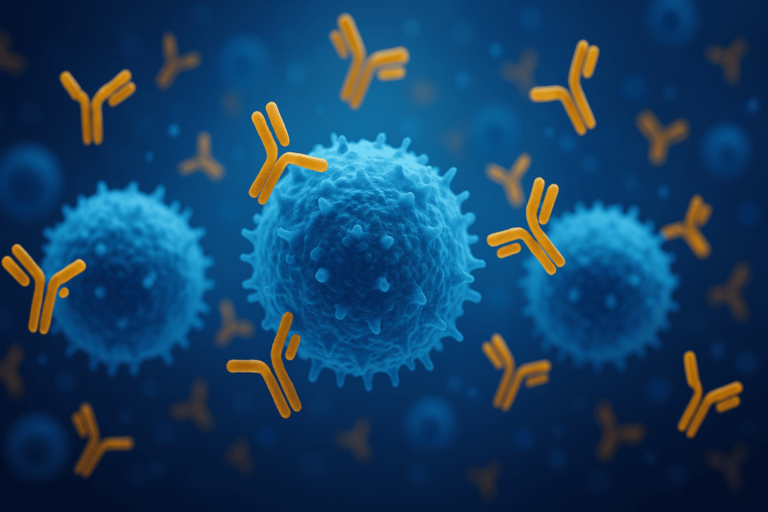
Vaccines are biological preparations that provide active acquired immunity to a particular infectious disease. A vaccine typically contains an agent that resembles a disease-causing microorganism and is often made from weakened or killed forms of the microbe, its toxins, or one of its surface proteins. Upon administration, the agent stimulates the body’s immune system to recognize it as foreign, destroy it, and “remember” it, so that the immune system can more easily recognize and destroy any of these microorganisms that it later encounters.
The development of vaccines has been one of humanity’s most significant medical achievements. A successful vaccination campaign led to the eradication of smallpox, a disease that had caused death and disfigurement for centuries. Infectious disease and vaccine are an essential tool in the fight against infectious diseases, helping to prevent outbreaks and pandemics by creating herd immunity when a significant proportion of a community becomes immune to a disease, thus limiting its spread.
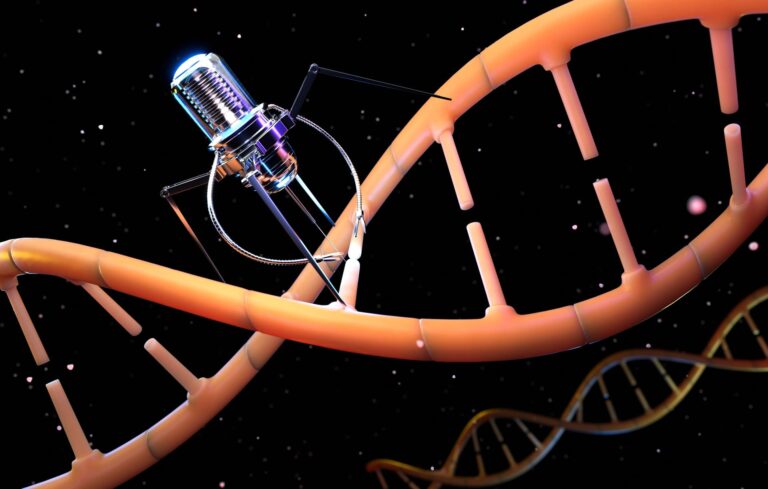
At the forefront of modern medical research, vaccines are continuously evolving with the development of new technologies, including mRNA vaccines, which have been vital in addressing the COVID-19 pandemic at unprecedented speeds. These advances are augmenting our arsenal against infectious diseases and shifting the landscape of global health security.
Understanding both the nature of infectious diseases and the role of vaccines in preventing them is crucial for public health and informs policies and personal decisions surrounding healthcare. It involves a multi-faceted approach, including education, vaccination, sanitation, and responsive medical care, all of which work together to safeguard individual and collective health.
What role have clinical trials played in vaccine development?
Clinical trials are the bedrock of vaccine development, playing a pivotal role in ensuring that any potential vaccine is both safe and effective before it is approved for widespread use. The meticulous process of clinical trials is essential in scrutinising a vaccine candidate to understand its impact on the human body.
The phases of clinical trials for infectious disease and vaccine
Clinical trials for vaccines unfold in a series of stages, each designed to answer specific research questions and ensure safety at every turn:
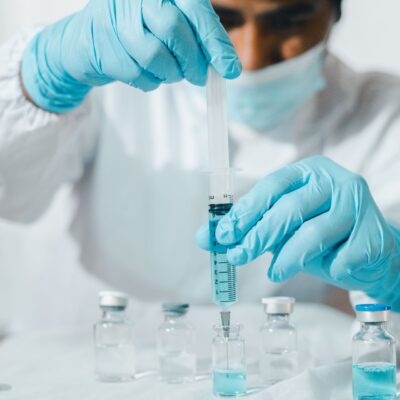
1. Preclinical Trials: Before human testing, vaccine candidates undergo rigorous preclinical trials where the effects are scrutinised in laboratory settings. These trials involve in-vitro (test tube or cell culture) and in-vivo (animal) experiments to gain an initial understanding of how the vaccine affects a living organism.
2. Phase I Trials: This inaugural phase in human trials focuses primarily on safety. Typically, a small group of volunteers is recruited to assess how the vaccine interacts with the human body, and to confirm that it doesn’t cause adverse health effects.
3. Phase II Trials: Expanding the pool of participants, Phase II trials provide a broader understanding of the vaccine’s safety, the appropriate dosage, and preliminary effectiveness. At this juncture, the vaccine is administered to individuals who have characteristics (such as age and physical health) similar to those for whom the vaccine is intended.
4. Phase III Trials: Involving thousands of participants, Phase III trials are conducted under real-world conditions to assess the vaccine’s efficacy and monitor for side effects. This phase often entails a randomised controlled study, providing the strongest evidence for the vaccine’s performance.
5. Phase IV Trials: Even after approval and roll-out, vaccines are subject to continuous monitoring through Phase IV trials. These studies, often referred to as post-marketing surveillance, help detect any long-term or rare side effects and ensure the vaccine continues to meet stringent safety standards.
The impact of clinical trials in infectious disease and vaccine development
Clinical trials are integral to the evolution of vaccines and have critical short- and long-term impacts:
– Safety and Efficacy Assessment: By exposing vaccine candidates to a step-by-step scrutiny process, clinical trials help identify optimal dosages and reveal any potential side effects before a vaccine is made available to the public.
– Public Confidence: Stringent and thorough clinical trials are crucial for building public trust. When vaccines are proven to be safe and effective through this rigorous process, vaccine uptake is likely to be higher.
– Global Health Implications: Successful clinical trials can lead to the introduction of vaccines that control or eradicate diseases, dramatically improving global health outcomes. For instance, the eradication of smallpox and the near-elimination of polio are direct results of vaccine trials leading to global immunisation efforts.
– Adaptation to New Challenges: Ongoing clinical trials allow researchers to modify existing vaccines to combat new variants of a virus or to respond to entirely novel pathogens. For example, the rapid development
What are the challenges in clinical trials regarding infectious disease and vaccine?
Clinical trials focusing on infectious disease and vaccine face significant challenges when it comes to recruiting and retaining participants. One primary reason is the fear and stigma often associated with infectious diseases, which can lead to potential participants avoiding clinical trials due to concerns about privacy and discrimination. Moreover, these trials frequently target populations that are either underserved by healthcare systems or have limited access to medical care, which can complicate outreach and engagement efforts.
Varying disease prevalence and epidemiology
infectious disease and vaccine often have fluctuating prevalence rates, with outbreaks occurring unpredictably. This variability makes it difficult to conduct trials in regions where the disease is endemic at any given time. Furthermore, the epidemiological patterns of infectious diseases can alter rapidly in response to environmental changes, human behaviour, and other factors, requiring adaptable trial designs and flexible research strategies to ensure the collection of valid and reliable data.
Ethical considerations in trial design
Ethical issues are particularly poignant in infectious disease research. Trials must balance the imperative to develop new treatments with the need to protect the rights and well-being of participants. This includes ensuring informed consent, maintaining confidentiality, and providing the best-known care to control groups notwithstanding the experimental nature of the treatments being tested. Dilemmas also arise in placebo-controlled trials and in providing post-trial access to treatments that have proven effective.
Regulatory hurdles and global coordination of infectious disease and vaccine
The global nature of infectious diseases necessitates collaboration across borders, but disparate regulatory frameworks can complicate this coordination. Aligning protocols and gaining approval from multiple regulatory agencies can be a time-consuming process and can introduce delays in the research progress. These hurdles are exacerbated when dealing with fast-moving epidemics, as the urgency of the situation demands swift action that regulatory processes are not always equipped to accommodate.
Adapting to rapid evolution of pathogens
Many infectious agents, particularly viruses, are notorious for their ability to mutate rapidly. This can render treatments or vaccines under investigation less effective or even obsolete. Clinical trials must therefore be designed in a way that can accommodate the evolving nature of the pathogen, which may involve complex adaptive trial designs and constant monitoring of the infectious agent’s genetic landscape.
By understanding and addressing these challenges head-on, researchers and public health professionals can more effectively develop strategies for conducting clinical trials in the realm of infectious diseases. This will ultimately contribute to the more rapid discovery of efficacious therapies, vaccines, and prevention strategies that can save lives and curb the impact of infectious diseases worldwide.
The path ahead: innovation in infectious disease control
Infectious disease and vaccine are inextricably linked in the ongoing dance of human wellness. Through a deeper understanding of these diseases and widespread vaccination, humanity arms itself not just against current threats but paves the way for security against future outbreaks. The collaborative global effort to research and develop vaccines must continue, as they serve not only as shields against potential epidemics but also as beacons of hope in the quest for a healthier world. With each scientific breakthrough and each successful vaccination program, we edge closer to a reality where the threat of infectious diseases diminishes, heralding a new era of human health and prosperity.
FAQ regarding infectious disease and vaccine
1. What exactly is an infectious disease, and how does it spread?
An infectious disease is caused by microorganisms such as bacteria, viruses, fungi, or parasites. It spreads through various routes — direct human contact, contaminated surfaces, airborne droplets, food, water, or insect vectors like mosquitoes and ticks.
2. How do vaccines protect us from infectious diseases?
Vaccines train the immune system to recognize and combat pathogens without causing illness. When vaccinated, your body creates memory cells that respond faster and stronger if exposed to the actual pathogen in the future.
3. What are the main phases of vaccine clinical trials?
Vaccine trials progress through several stages:
-> Preclinical: Laboratory and animal testing.
-> Phase I: Safety in a small group of healthy volunteers.
-> Phase II: Expanded testing for safety, dosage, and immune response.
-> Phase III: Large-scale testing for efficacy and side effects.
-> Phase IV: Post-marketing surveillance for long-term safety.
4. Why are clinical trials crucial for infectious disease vaccines?
Clinical trials ensure that vaccines are safe, effective, and capable of generating long-lasting immunity. They also help identify the correct dosage and evaluate performance across different populations before approval for public use.
5. What challenges do researchers face in conducting infectious disease trials?
Common challenges include changing disease prevalence, recruitment difficulties, ethical concerns, regulatory differences across countries, and the rapid mutation of pathogens, which can render vaccines less effective or obsolete.
6. How are new vaccine technologies, such as mRNA, changing infectious disease prevention?
mRNA and vector-based vaccines allow scientists to design, test, and produce vaccines more quickly than traditional methods. These platforms played a pivotal role during the COVID-19 pandemic and are now being explored for influenza, malaria, and HIV.
References
- Understanding Infectious Diseases, World Health Organization (WHO), Accessed: 21 October 2025.
- How Vaccines Work, World Health Organization (WHO), Accessed: 21 October 2025
- Clinical Development and Approval of Vaccines: Guidance for Industry, U.S. Food and Drug Administration (FDA), Accessed: 21 October 2025.