




















Clinical trials require well-coordinated site operations and effective patient engagement to run efficiently and meet enrollment goals. Two types of organizations: SMO and PAO play important roles in supporting these efforts: Site Management Organizations (SMO) and Patient Access Organizations (PAO). While they often serve different functions, both contribute to improving trial performance and participant reach. Clarifying the different roles of SMO and PAO helps organize key concepts related to site support and patient recruitment – especially for those exploring new models or expanding into diverse patient populations.
1. What is an SMO?
A Site Management Organization (SMO) provides clinical trial-related services to contract research organizations (CROs), pharmaceutical companies, biotechnology firms, medical device companies, or clinical sites. These services often include patient recruitment, regulatory compliance, data management, and overall trial coordination. By centralizing these functions, SMOs aim to streamline site operations, enhance data quality, and ensure adherence to regulatory standards. For example, SMOs assist in patient counseling, submission for Institutional Review Board (IRB) / Research Ethics Committee (REC) approvals, and reporting serious adverse events, thereby reducing the administrative burden on individual sites.
2. What is a PAO?
Patient Access Organizations (PAOs) focus on facilitating patient participation in clinical trials, particularly among underserved or underrepresented populations. They engage in community outreach, education, and support to raise awareness about clinical research opportunities. PAOs often provide resources such as clinical trial finders, personalized navigation services, and educational platforms to empower patients in making informed decisions about trial participation. For instance, the healthcare advocacy organization – PAN Foundation has launched initiatives aimed at educating individuals about clinical trials and assisting them in navigating the complex landscape of research participation.1
3. Key Differences Between SMO and PAO
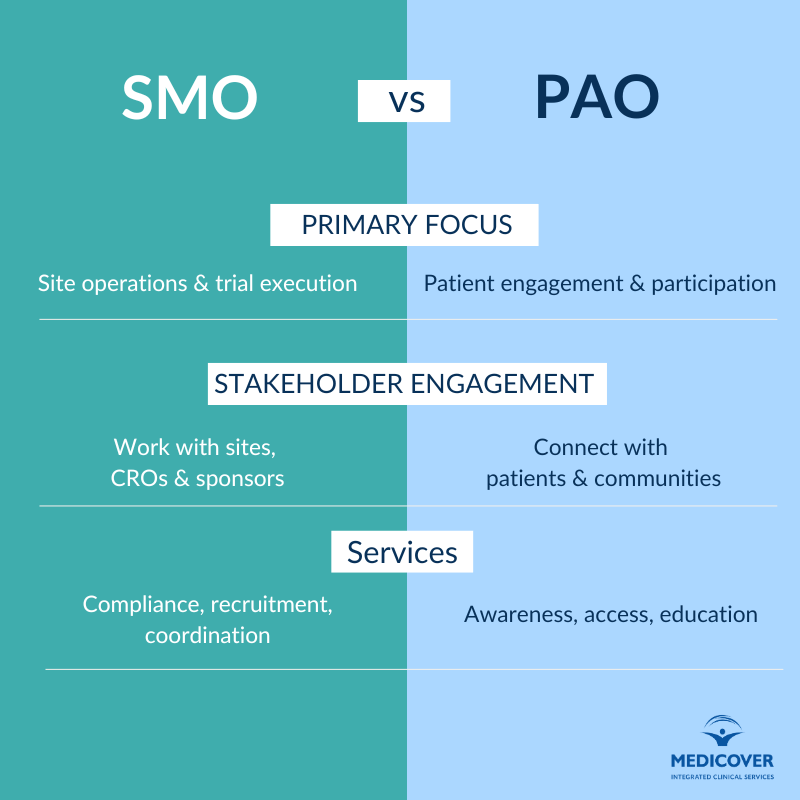
Primary Focus:
- SMOs: Concentrate on optimizing site-level operations and ensuring the efficient execution of clinical trials.
- PAOs: Prioritize patient engagement, education, and support to enhance trial participation rates. ClinicalTrials
Stakeholder Engagement:
- SMOs: Collaborate primarily with clinical sites, CROs (Contract Research Organisation), and sponsors to manage trial logistics.
- PAOs: Engage directly with patients, community groups, and healthcare providers to promote awareness and facilitate access to trials.
Services Offered:
- SMOs: Provide services such as regulatory compliance, patient recruitment at the site level, data management, and trial coordination.
- PAOs: Offer educational resources, patient navigation services, and tools like clinical trial finders to assist individuals in identifying suitable research opportunities.
4. Collaborative Potential
While SMO and PAO operate in different spheres, their collaboration can significantly enhance clinical trial success. PAOs can identify and refer motivated patients to clinical sites managed by SMOs, ensuring a steady flow of participants. Conversely, SMOs can provide the infrastructure and operational expertise necessary to accommodate and support these participants effectively. This synergy can lead to improved patient enrollment, retention, and overall trial efficiency.
5. Conclusion
Clarifying the different roles of SMO and PAO helps organize key concepts related to site support and patient recruitment – especially for those exploring new models or expanding into diverse patient populations. By understanding how these organizations contribute from different angles, stakeholders can better plan inclusive, efficient studies and improve outcomes across clinical development.
FAQ: SMO and PAO in Clinical Trials
1. Are SMOs and PAOs competitors?
No, they serve different purposes. SMOs focus on supporting clinical trial sites operationally, while PAOs work to improve patient access and engagement. They can work independently or in collaboration to enhance trial outcomes.
2. When should a sponsor consider partnering with a PAO?
Especially in studies involving hard-to-reach or underserved populations. PAOs are skilled in community outreach, education, and trust-building, which can significantly improve recruitment in such groups.
3. Can a CRO or sponsor work with both an SMO and PAO in the same trial?
Yes. In fact, combining their strengths can streamline site performance and boost patient enrollment – particularly in complex or multi-country trials.
4. Do PAOs recruit patients directly?
Not in the same way as SMOs. PAOs raise awareness and provide guidance to patients, helping them find suitable trials. The actual enrollment process typically happens at clinical sites.
5. Are there regulatory differences in how SMOs and PAOs operate?
Yes. SMOs often work within regulatory frameworks related to trial conduct and data collection. PAOs, while not subject to the same clinical regulations, must comply with ethical and privacy standards in their patient-facing work.
7. References
- PAN Unveils New Mission, Brand, Adds Clinical Trial Education Program, PAN Foundation, https://www.panfoundation.org/pan-unveils-new-mission-brand-adds-clinical-trial-education-program/, Accessed: 01.04.2025
- Clinical Trials: Phases, Definition, and Process, U.S. Food and Drug Administration, https://www.fda.gov/patients/clinical-trials-what-patients-need-know, Accessed: 01.04.2025
- Diversity in Clinical Trials, National Institutes of Health, https://www.nih.gov/health-information/nih-clinical-research-trials-you/diversity-clinical-trials, Accessed: 01.04.2025
- Patient Engagement in Clinical Trials, Clinical Trials Transformation Initiative, https://www.ctti-clinicaltrials.org/projects/patient-engagement/, Accessed: 01.04.2025