
























Advances in cell and gene therapies (CGTs) are revolutionizing modern medicine and transforming the landscape of clinical trials. These innovative approaches hold the potential to treat or even cure diseases that were previously considered untreatable. At Medicover Integrated Clinical Services, we’re proud to support advancements in CGTs through our comprehensive clinical trial expertise.
In this article, we’ll explore the foundational concepts of advances in cell and gene therapies, their applications, and their impact on clinical trials.
What Are Advances in Cell and Gene Therapies?
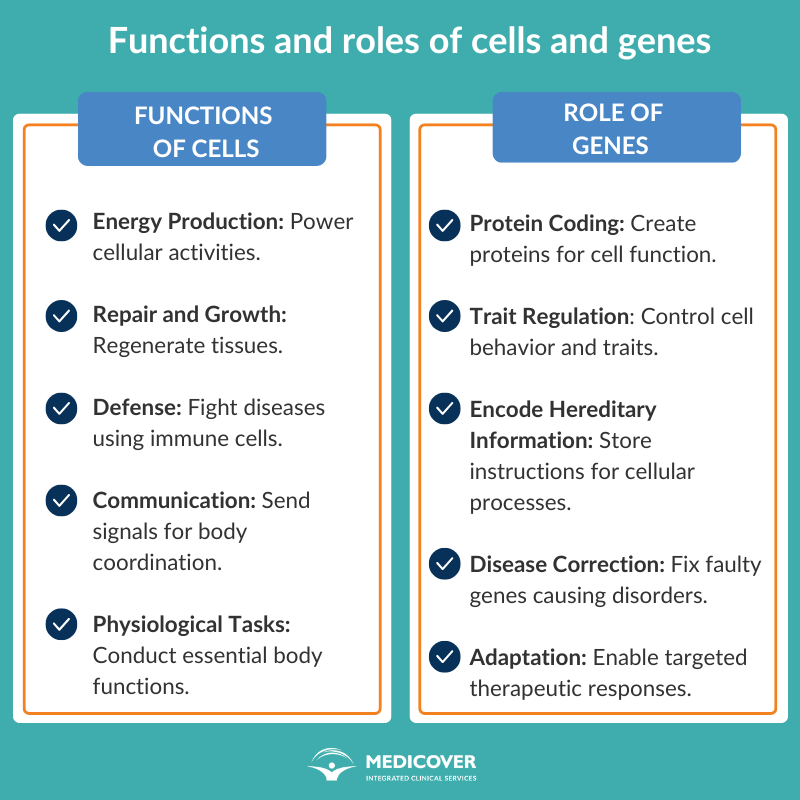
Before delving into the explanation of these therapies, it is essential to first understand what cells and genes are. These two elements serve as foundational pillars in understanding biological processes, each playing a crucial role in the development and sustenance of life. Cells, the fundamental building blocks of all living organisms, exist in various forms – such as blood, nerves, and muscle cells. Each is responsible for specific functions within the body. Complementing cells, genes are units of heredity made of DNA, carrying vital instructions that regulate cell development, function, growth, and reproduction.
Functions and roles of cells and genes relevant to CGTs
So, what are advances in Cell and Gene Therapies? At their core, these innovative treatments use cells or genetic material to treat or prevent disease. They harness the body’s natural mechanisms to target conditions at their root cause, offering solutions that go beyond merely alleviating symptoms.
- Cell therapy involves using living cells as therapeutic agents, such as immune cells engineered to target and destroy cancer cells.
- Gene therapy focuses on modifying or replacing faulty genes to correct genetic disorders.
By addressing the root cause of disease, CGTs offer a personalized and potentially curative approach to healthcare.
How Do advances in Cell and Gene Therapies Work?
This dual category of therapy provides an innovative foundation, altering human biology on a fundamental level. Gene therapy focuses on modifying or replacing defective genes involved in disease development, addressing genetic factors that contribute to health issues. Techniques such as viral vectors are used to deliver corrected or new genes into a patient’s cells, enabling the body to combat disease by either repairing faulty genes or introducing new genetic instructions.
Cell therapy involves transplanting healthy, living cells into patients to restore or repair compromised tissue function. This process often includes collecting cells from the patient or a donor, modifying them in a lab, and reintroducing them into the body to combat disease. A notable example is CAR-T cell therapy, where a patient’s T cells are engineered to target and destroy cancer.
Types of Cell and Gene Therapies
Advances in Cell and gene therapies embody diverse and complex processes aimed at combating diseases through biological innovations. Cell therapies leverage living cells to treat or cure diseases, primarily by repairing or replacing malfunctioning tissues. These therapies can be autologous, using the patient’s own cells, or allogeneic, sourcing cells from donors, each with unique application potentials and benefits. Conversely, gene therapies focus on manipulating genetic material within the patient’s cells, aiming to correct genetic disorders or enhance cell functionality.
Notably, gene therapy techniques include viral vector introduction and gene editing technologies like CRISPR, along with non-viral vector methodologies. Each type plays an integral role in clinical trials, pioneering treatments for conditions that once lacked effective interventions.
- Gene Editing Therapy
Involves directly modifying genes within a patient’s cells to correct genetic defects (e.g., CRISPR, TALENs).
- Gene Replacement Therapy
Delivers a healthy copy of a gene to replace a defective one, addressing diseases caused by gene mutations (e.g., gene therapy for cystic fibrosis or muscular dystrophy).
- Cell Therapy
Uses living cells to treat diseases, such as stem cell therapy to regenerate damaged tissues or immune cell therapy to fight cancer.
- CAR-T Cell Therapy
A type of immune cell therapy that modifies a patient’s T cells to recognize and destroy cancer cells.
- Stem Cell Therapy
Involves using stem cells to replace damaged or diseased cells in conditions like spinal cord injury, heart disease, and neurological disorders.
- Immune Cell Therapy
Modifies or enhances immune cells (like T cells or NK cells) to better fight diseases such as cancer and viral infections.
- Ex Vivo Gene Therapy
Cells are modified outside the body (in vitro) and then transplanted back into the patient to treat the disease.
- In Vivo Gene Therapy
Delivers therapeutic genes directly into the patient’s body, often using viral vectors, to correct genetic defects at the site of disease.
These therapies are often used in combination to target complex diseases, offering personalized treatment options for various conditions.

How Cell and Gene Therapy Address Genetic Diseases
Genetic diseases are conditions caused by mutations or abnormalities in an individual’s DNA. These disorders can be inherited or arise spontaneously. Innovations in biotechnology, alongside an evolving understanding of genetics, drive the progress of cell and gene therapies, particularly within clinical trials. As regulatory frameworks advance and successful trials accumulate, the broader adoption of those therapies in clinical practice becomes increasingly viable. The integration of these therapies into mainstream medicine offers more sustainable, effective pathways to combat genetic challenges.
CGTs target the root cause of genetic disorders. For example:
- Sickle Cell Disease: Gene therapy can repair the faulty hemoglobin gene, improving red blood cell function.
- Hemophilia: Gene therapy delivers a functional version of the clotting factor gene, reducing bleeding episodes.
The Role of CGTs in Medicover Integrate Clinical Services Clinical Trials
The development of CGTs relies heavily on clinical trials to evaluate their safety, efficacy, and scalability. These trials are often complex, requiring advanced laboratory capabilities and specialized expertise.
At Medicover Integrated Clinical Services, we provide:
- Centralized lab services tailored for CGT trials.
- Precision medicine and companion diagnostics to optimize patient selection.
- Comprehensive project management for seamless trial execution.
Our expertise ensures that CGTs can be evaluated efficiently, paving the way for their integration into mainstream medicine.
Conclusion
Advances in cell and gene therapies represent a new frontier in medicine, offering hope for patients with previously untreatable conditions. As these therapies continue to evolve, clinical trials remain crucial in demonstrating their potential and bringing them to the forefront of healthcare.
FAQs About Cell and Gene Therapies
What are advances in cell and gene therapies?
They are revolutionary treatments aiming to repair or replace defective genes or cells, targeting various diseases.
What differentiates gene and cell therapies?
While gene therapy focuses on genetic corrections, cell therapy introduces live cells for regenerative purposes.
Are CGTs safe?
While CGTs show immense promise, they are subject to rigorous testing in clinical trials to ensure safety and efficacy.
Are there side effects and current statuses?
Though promising, understanding potential side effects and the progress within clinical research is ongoing.
How long do CGT treatments last?
Some therapies, like gene therapy, offer long-term or permanent effects after a single treatment. It is worth to remember that every year proceed advances in cell and gene therapies.
Are advances in cell and gene therapies widely available?
Access remains limited due to high costs and complex production processes, but ongoing research aims to make them more accessible.
How do advances in cell and gene therapies aid clinical trials?
By offering targeted and potentially curative approaches, these therapies significantly advance clinical trials.
What are the ethical and regulatory considerations?
Acknowledging the complex nature, these therapies demand thorough regulatory pathways and ethical scrutiny.
Autor: MICS Editorial Team.