























Clinical Pharmacokinetics (PK) is a type of analysis that plays a crucial role in the design, implementation, and interpretation of clinical trial results. It delivers information about the absorption, distribution, metabolism, and excretion (ADME) of drugs within the body. This field of study provides valuable insights into how a drug behaves after administration, guiding decisions related to dosing, safety, efficacy, and regulatory approval.
In this article, we’ll explore how clinical pharmacokinetics analysis impacts on drug development, influences clinical decision-making and helps to ensure that therapies are both safe and effective for patients.
Understanding Clinical Pharmacokinetics
Pharmacokinetics (PK) involves the study of the time course of drug absorption, distribution, metabolism, and elimination from the body. These processes determine the concentration of a drug at its site of action and are critical to understanding the drug’s therapeutic effects and potential adverse reactions.
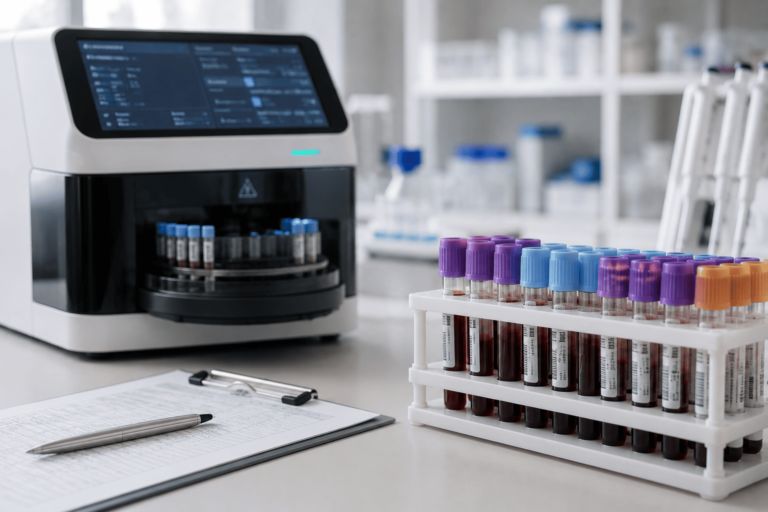
Clinical pharmacokinetics analysis relies on measuring drug concentrations (and/or its metabolites) in plasma or other biological matrices at different time points after administration. Key parameters involved in pharmacokinetics include the highest concentration after drug administration (Cmax), the time needed to reach maximum concentration (Tmax), the time it takes for the plasma concentration of the drug to reduce by half (T1/2), total exposure to the drug over time, which represents the drug’s bioavailability (Area Under the Curve [AUC]), and the volume of plasma cleared of the drug per unit time, which provides an estimate of how efficiently the body eliminates the drug (Clearance [CL]).
These parameters are essential for understanding the pharmacokinetics profile of a drug and for optimizing its use in clinical practice.
Pharmacokinetics is the study of how a drug moves through the body, focusing on absorption, distribution, metabolism, and elimination. It helps understand how the body affects the drug after administration.
The Role of Pharmacokinetics Analysis in Clinical Trials
Clinical pharmacokinetics (PK) analysis is integral to every phase of clinical trials. From preclinical to late-stage clinical trials, PK data provide valuable information for drug development.
Determining the optimal dose
One of the main areas where PK analysis is used is dose determination (including dosing schedule). Pharmacokinetics data guide the selection of appropriate dosing regimens. Clinical trials often begin with small doses to assess the drug’s safety, but as the trial progresses, it is critical to determine the optimal dose that balances efficacy and safety. Clinical Pharmacokinetics analysis helps identify the dose that achieves the desired therapeutic concentration while minimizing the risk of toxic effects and helps to determine the maximum tolerated dose (MTD).
Assessing the bioavailability and bioequivalence
PK is also used for assessing bioavailability and bioequivalence. Bioavailability refers to the proportion of an administered dose of drug that reaches a systemic circulation and is available for therapeutic effect. Clinical Pharmacokinetics analysis is essential for determining the bioavailability of a drug and assessing bioequivalence between different formulations or routes of administration (for example oral vs intravenous) influenced by factors like gastrointestinal conditions and first-pass metabolism. This is particularly important for generic drug development, where demonstrating bioequivalence to a reference drug is necessary for regulatory approval.
Pharmacokinetics plays a significant role in understanding how the drug behaves in specific populations, including those with varying ages, genders, ethnic backgrounds, and pre-existing conditions. These populations may metabolize drugs differently, affecting both the efficacy and safety of a treatment. pediatric or geriatric patients may have different enzyme activity or organ function, which can impact drug metabolism and elimination. Patients with kidney or liver disease may experience altered PK, requiring dose adjustments to avoid toxicity. PK analysis in these patients ensures that the drug reaches the desired therapeutic concentration while reducing the risk of adverse effects.
Effectiveness of the new drug vs risk of toxicity
Many drugs are metabolized by enzymes in the liver, especially cytochrome P450 enzymes. Clinical Pharmacokinetics analysis helps identify potential drug-drug interactions that may occur when a new drug is taken with other medications. These interactions can lead to altered drug concentrations, either decreasing the effectiveness of the new drug or increasing the risk of toxicity. In clinical trials where participants are on multiple medications, PK analysis can determine how the new drug interacts with existing treatments. This data helps adjust dosing regimens to avoid adverse effects and improve therapeutic outcomes.
Regulatory agencies, such as the U.S. Food and Drug Administration (FDA) and the European Medicines Agency (EMA), require comprehensive PK data before granting approval for a new drug. These agencies use PK analysis to assess the safety, efficacy, and appropriate dosage of drugs. Detailed Clinical Pharmacokinetics data, including dose-response relationships and pharmacokinetics modeling, are essential for regulatory submissions.
Challenges in Clinical Pharmacokinetics Analysis
While PK analysis is essential in drug development, it comes with certain challenges. One significant challenge is variability in outcomes, as individual differences in drug metabolism—affected by genetics, environment, and other factors—can complicate the interpretation of PK data.
In clinical trials, particularly those involving vulnerable populations, ethical considerations related to safety and informed consent are paramount. Clinical pharmacokinetics studies often require invasive methods, such as blood sampling, which must be conducted with care and transparency to uphold ethical standards.
Another challenge is the complexity of modeling and simulation. Pharmacokinetics modeling requires specialized software and expertise to simulate and predict the behavior of drugs in different populations. These models must be continuously refined and validated with real-world data, making the process both technically demanding and resource-intensive.
Conclusions
Clinical pharmacokinetics analysis is a cornerstone of clinical trial design and drug development. It provides critical insights into how a drug is absorbed, distributed, metabolized, and eliminated in the body, influencing key decisions about dosing, safety, efficacy, and regulatory approval.
By utilizing PK data, clinicians can ensure that patients receive drugs that are both effective and safe. As personalized medicine continues to evolve, pharmacokinetics analysis will play an increasingly central role in optimizing treatments for diverse patient populations, enhancing therapeutic outcomes, and minimizing adverse effects.
Contact us to get a quote today for your Pharmacokinetics studies
We response in 24 hours.
FAQ: Pharmacokinetics in Clinical Trials
1. What is pharmacokinetics?
Pharmacokinetics is the study of how a drug moves through the body, focusing on absorption, distribution, metabolism, and elimination. It helps understand how the body affects the drug after administration.
2. Why is pharmacokinetics important in clinical trials?
Clinical Pharmacokinetics is essential for determining the appropriate dosage, frequency, and duration of treatment. It ensures the drug is both safe and effective for patients.
3. How is pharmacokinetics measured in clinical trials?
Pharmacokinetics is measured by collecting biological samples, such as blood or urine, at specific intervals to analyze drug concentration over time.
4. What are the key parameters of clinical pharmacokinetics?
The key parameters include absorption rate, bioavailability, half-life, clearance, and volume of distribution. These factors help define how the drug behaves in the body.
5. What is the difference between pharmacokinetics and pharmacodynamics?
While pharmacokinetics studies what the body does to the drug, pharmacodynamics focuses on what the drug does to the body, such as its effects and mechanisms of action.
6. How does clinical pharmacokinetics influence drug development?
Pharmacokinetics guides dose selection, identifies potential side effects, and predicts how different populations (e.g., children, elderly, or those with kidney issues) might respond to the drug.
7. Are pharmacokinetics studies required for all clinical trials?
Yes, pharmacokinetics is a critical part of early-phase clinical trials (Phase I and II) to establish safety and dosing guidelines. It is also evaluated in later phases for specific populations or formulations.
8. Can pharmacokinetics vary between patients?
Yes, factors like age, weight, genetics, liver and kidney function, and other medications can influence pharmacokinetics, leading to variability in drug response.
9. What role does clinical pharmacokinetics play in personalized medicine?
Pharmacokinetics helps tailor treatments to individual patients by predicting how they will metabolize and respond to a drug, improving safety and efficacy.
10. How are pharmacokinetic data used after a clinical trial?
The data support regulatory approvals, labeling information, and post-market studies to ensure the drug’s safe and effective use in the real world.